

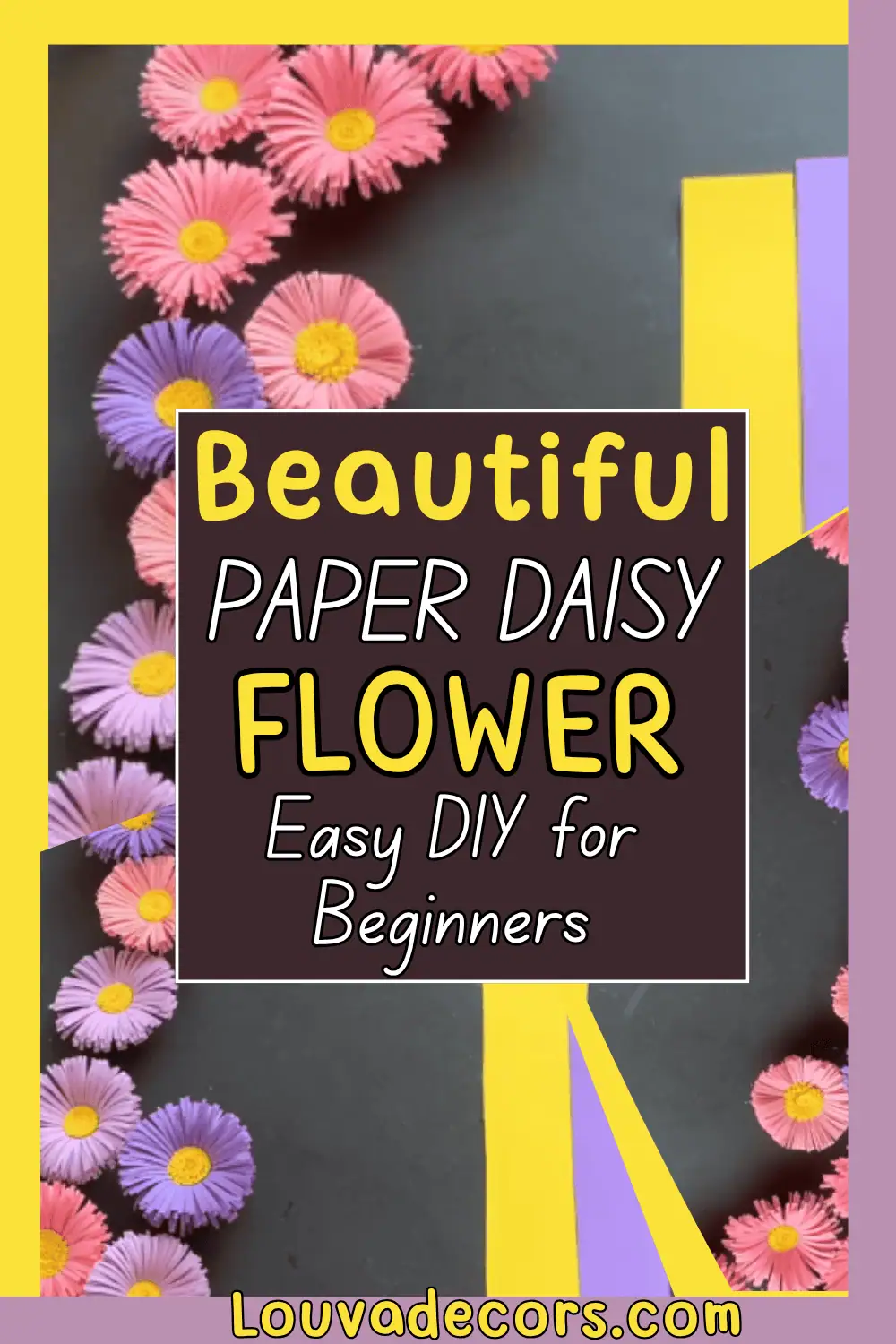
Picture a little cluster of daisy flowers sitting in a jar on your windows ill petals fanned out perfectly, centres bright yellow, colours as pretty as a garden in full bloom. Now imagine you made every single one of them with your own hands, using nothing but strips of coloured paper. That is exactly what this tutorial will give you.
You do not need any experience to make these. You do not need a craft room, special equipment, or anything fancy at all. By the end of this post, you will have a complete set of step-by-step instructions, a full video tutorial, and everything you need to make your very first paper daisy flower today.
These flowers take around 5 minutes each to make. You will need coloured cardstock or construction paper in pink, purple, and yellow, plus scissors and white glue. Time from start to a finished flower: about 5 minutes.
Why You Will Love This Project
This paper daisy flower tutorial is one of the most beginner-friendly crafts on the blog with no folding, no measuring, and no complicated techniques involved. Each flower looks so realistic and detailed that people will not believe you made it from paper strips. Whether you display them in a small vase, attach them to a gift box, or scatter them across a shelf, they look like something you paid good money for. And the full video tutorial is right here with you, so you are never working blind.
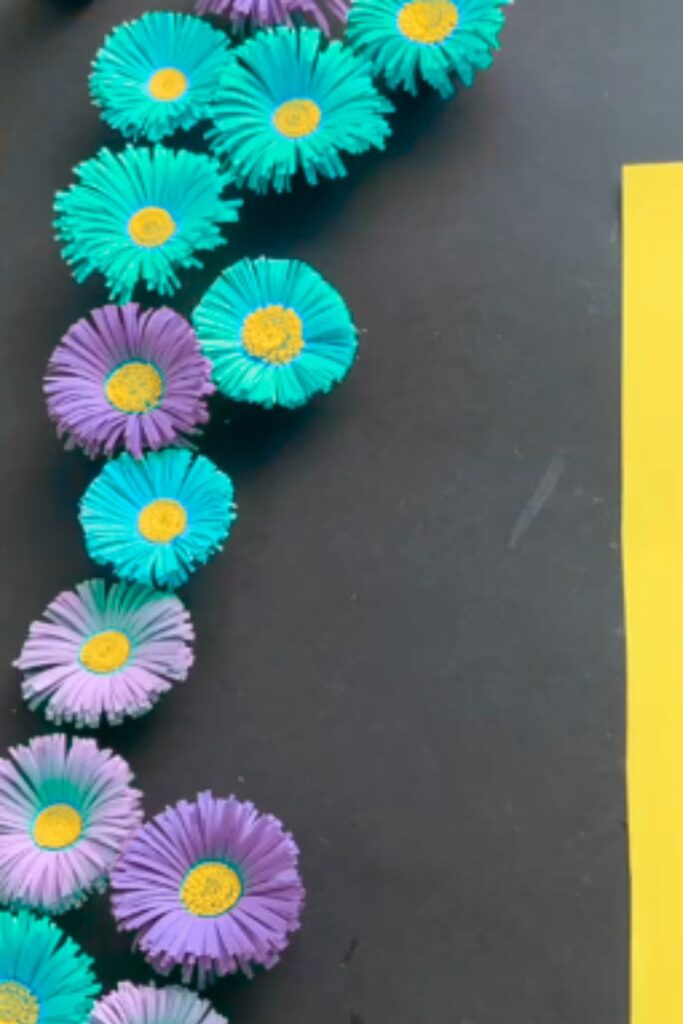
What You Will Need
- Pink cardstock or construction paper [or use any pink paper you already have at home]
- Purple or lilac cardstock or construction paper [or substitute with any purple craft paper]
- Yellow cardstock or construction paper [or cut strips from a yellow cereal box or paper bag]
- Scissors [any household scissors will work fine; craft scissors are not required]
- White PVA glue or a glue stick [or use a small piece of double-sided tape]
- A ruler [or use the edge of a hardcover book to help you cut straight strips]
Total estimated cost: $2–$6 All materials can be found at your local craft store or ordered online.
Video Tutorial
Watch the full tutorial above before reading the written steps. The written steps below match the video exactly so you can follow along at your own pace.
Step-by-Step Instructions
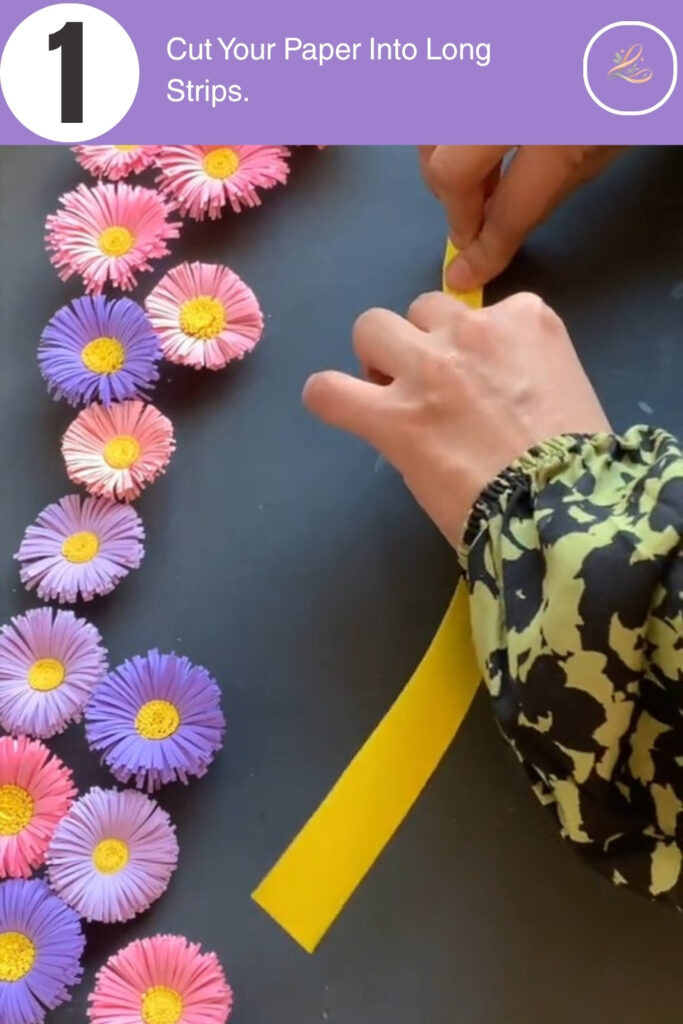
Step 1: Cut Your Paper Into Long Strips
Take your sheet of coloured paper and cut it into long, narrow strips approximately 1.5–2 cm wide. You will need one strip per flower for the petals, plus a shorter strip of yellow paper for the centre. Cut several strips at once if you want to make a small bunch of flowers. Take your time getting your strips as straight as you can. They do not need to be perfect, but neater strips will give you a tidier flower in the end.
At this point, you should have a small pile of long coloured paper strips ready to work with.
Pro Tip: Stack 2–3 sheets of paper together and cut multiple strips at the same time. It is a huge time-saver when you want to make a full bouquet.
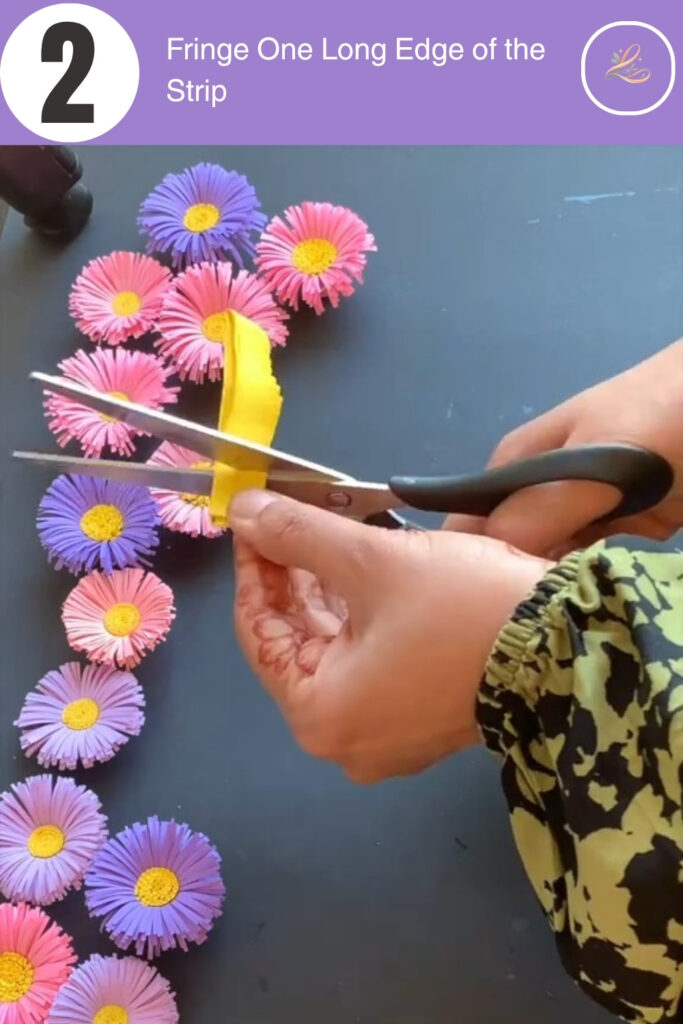
Step 2: Fringe One Long Edge of the Strip
Hold your paper strip flat and make a series of small, close cuts along one long edge of the strip cutting about two-thirds of the way across the width, but not all the way through. These cuts create the fringe that will become your flower petals. Keep your cuts close together roughly 2–3 mm apart so the fringe looks full and feathery. Work your way along the entire length of the strip. No rush at all, this step takes a minute or two and it is worth doing carefully.
When you are done, your strip should look like a long comb with lots of fine paper teeth along one edge.
Pro Tip: The closer together your cuts are, the fuller and more realistic your flower petals will look. Wider cuts give a more graphic, modern daisy style and both look wonderful.
Step 3: Check Your Fringe Is Even
Once you have fringed the full length of your strip, lay it flat on your work surface and take a good look along the entire edge. Check that none of your cuts accidentally went all the way through the strip. If any fringe pieces have separated, do not worry you can dab a tiny bit of glue to rejoin them, or set them aside and use them as extra petals later. It is okay if it is not perfect, the fringe will fluff out once you roll the flower, and any small gaps will be hidden.
At this stage, your strip should look beautifully fringed all the way along one edge, with a solid uncut base along the other edge.
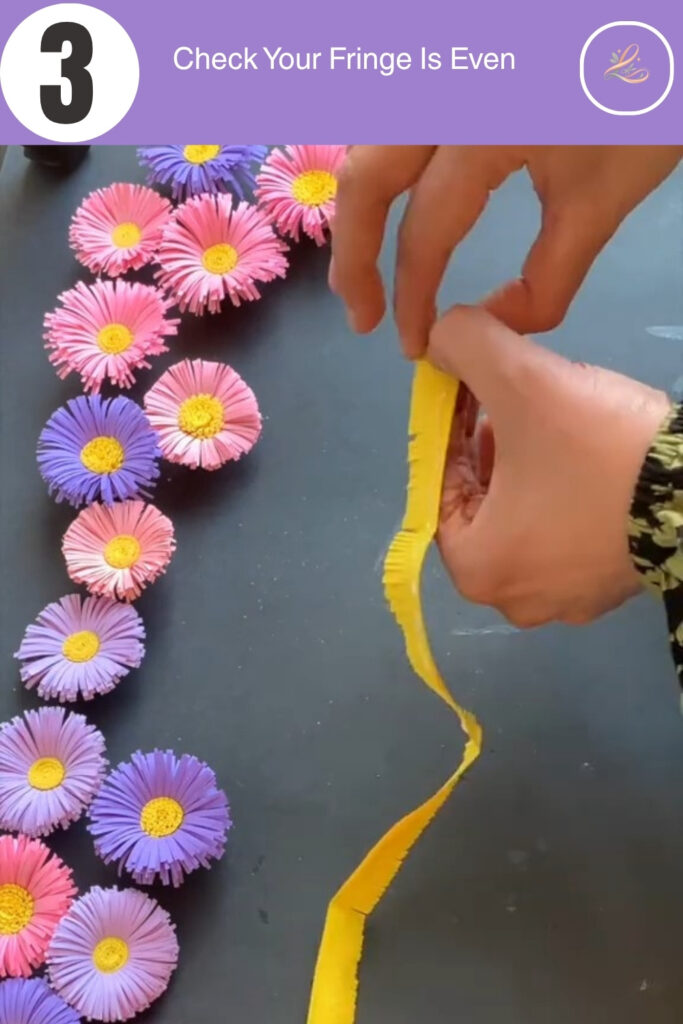
Pro Tip: If your fringe looks a little flat right now, gently run your thumbnail along the cut edges to give them a subtle curl. This makes the finished petals fan out even more beautifully once the flower is rolled.
- 20 Easy DIY Santa Crafts to Make This Christmas (Cheap & Adorable)
- Lovely Paper Pop Up Tulip Card Anyone Can Make
- Cute Paper Chinese New Year Garland Anyone Can Make
- Adorable Halloween Paper Hat Craft for Beginners
- Make Sweet DIY Flower Greeting Card for Loved Ones
Step 4: Roll the Strip Into a Flower Shape
Take one end of your fringed strip and begin rolling it tightly between your fingers, keeping the uncut base edge flat at the bottom as you roll. Roll slowly and keep the base as even as you can this will help your flower sit flat when it is finished. As you roll, the fringed petals will fan outwards and upwards, beginning to look like a real flower. Keep rolling until you have used the entire strip.
Your flower should now be taking the shape of a tight rolled centre with a ring of upward-fanning fringe all around it.
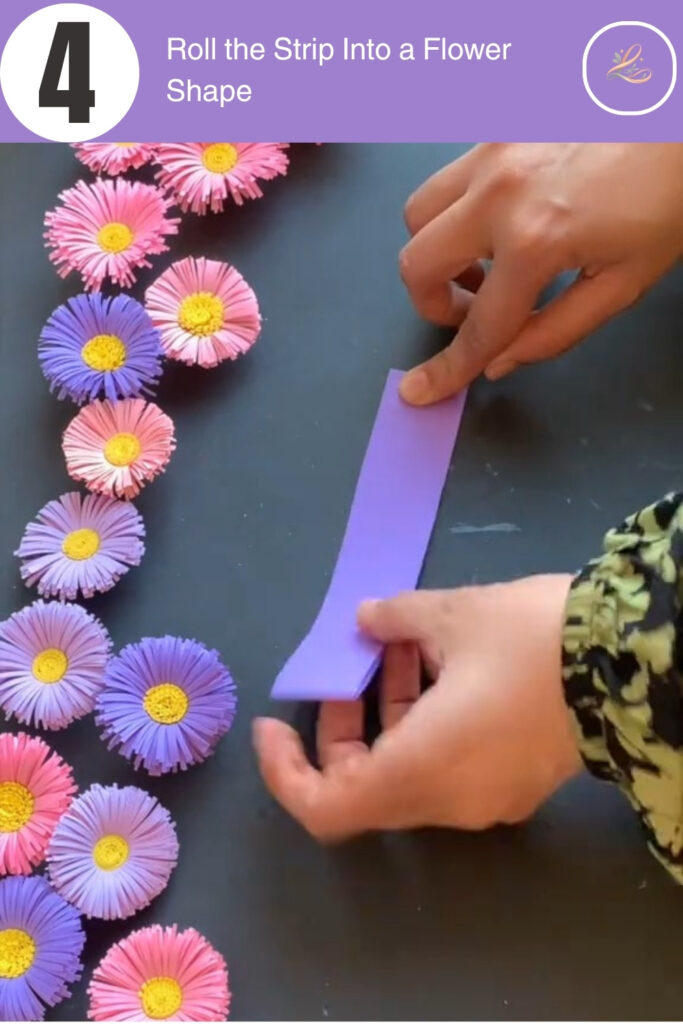
Pro Tip: Roll just a little more tightly than you think you need to. Paper flowers tend to loosen and open up slightly once you let go, so starting tight gives you a beautifully full result.
Step 5: Secure the Base with Glue
Once your flower is fully rolled, hold the base firmly between your fingers and apply a small amount of glue along the bottom edge of the strip to hold everything in place. Press and hold for 20–30 seconds until the glue begins to grip. If you are using a glue stick, apply a generous line along the base before you reach the end of the strip, so it seals as you finish rolling. Set the flower down flat on your work surface and let it rest for a minute before moving on.
Your flower should now hold its shape on its own without you needing to hold it.
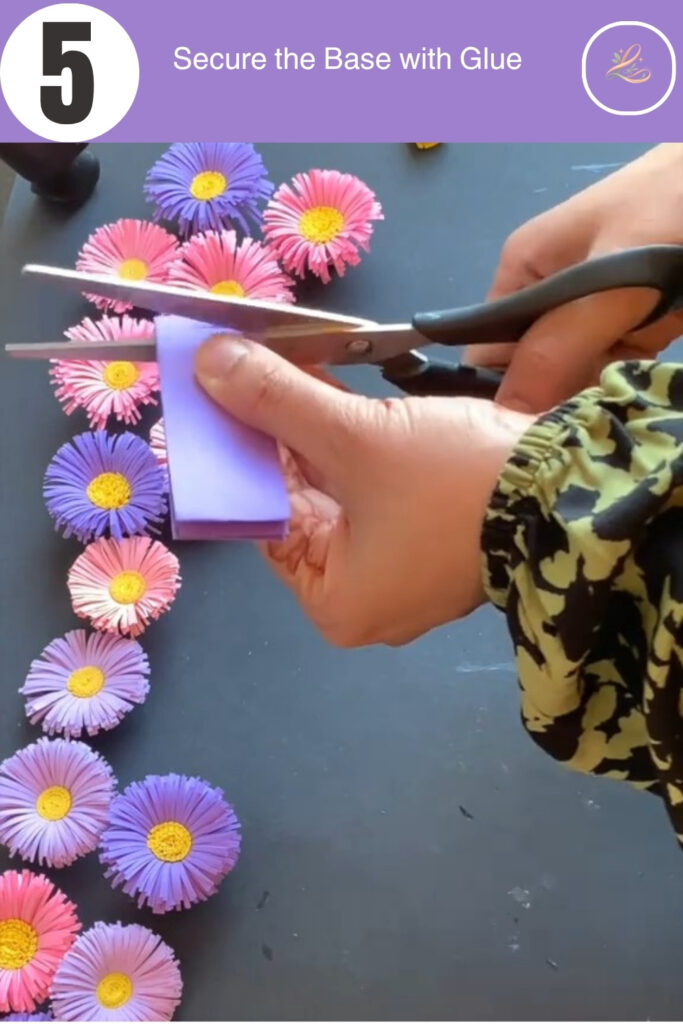
Pro Tip: Place the finished flower upside down (petals facing down) on your work surface while the glue dries. The weight of the base helps the glue bond more firmly.
Step 6: Make the Yellow Centre
Cut a shorter strip of yellow paper about 10–12 cm long and fringe it the same way you did your petal strip. Roll it up tightly into a small, dense yellow circle. This will be the centre of your daisy. Apply a dot of glue to secure the end, and let it set for a moment. The yellow centre should be noticeably smaller and denser than your petal flower; it sits on top of the petals, like the bright middle of a real daisy.
You now have two components ready: your coloured petal flower and your yellow centre.
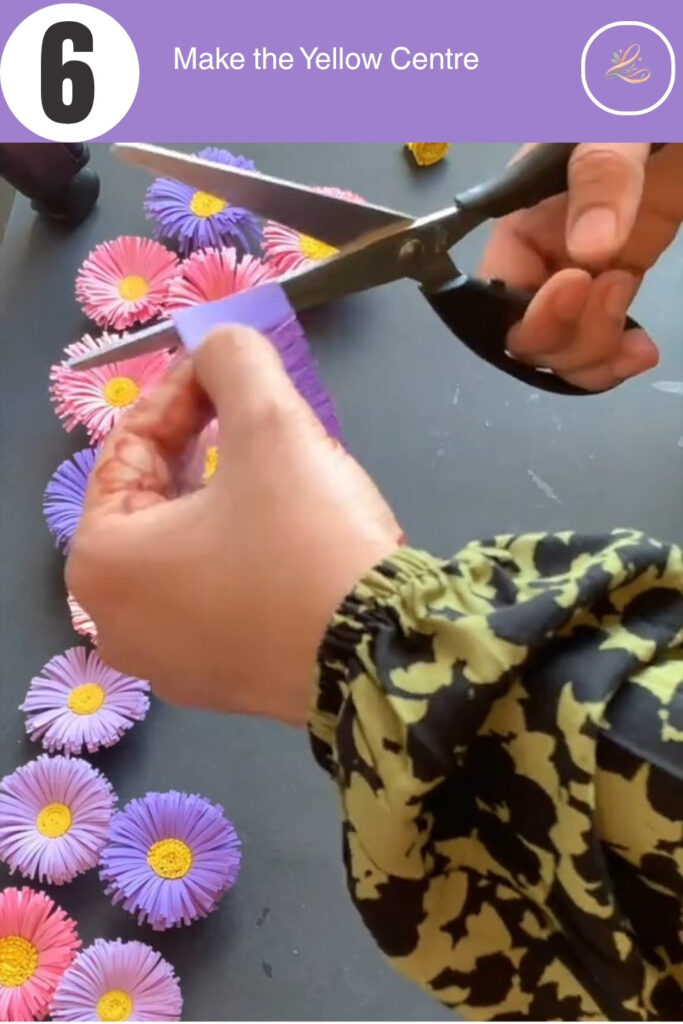
Pro Tip: Roll the yellow centre as tightly as possible so it looks like a compact, textured pollen centre. A loose yellow centre will look too large and cover too much of your beautiful petals.
Step 7: Attach the Centre to the Flower
Place a small dot of glue on the flat base of your yellow centre, then press it firmly onto the middle of your fringed petal flower. Hold it in place for 30 seconds. The yellow should sit right in the very centre of the petal fringe, looking like the heart of a real daisy. Gently press the yellow fringe outward and downward with your fingertip to help it nestle into the petals naturally. Give the glue a full minute to set before you handle the flower too much.
Your paper daisy flower is now complete and it should look absolutely gorgeous.
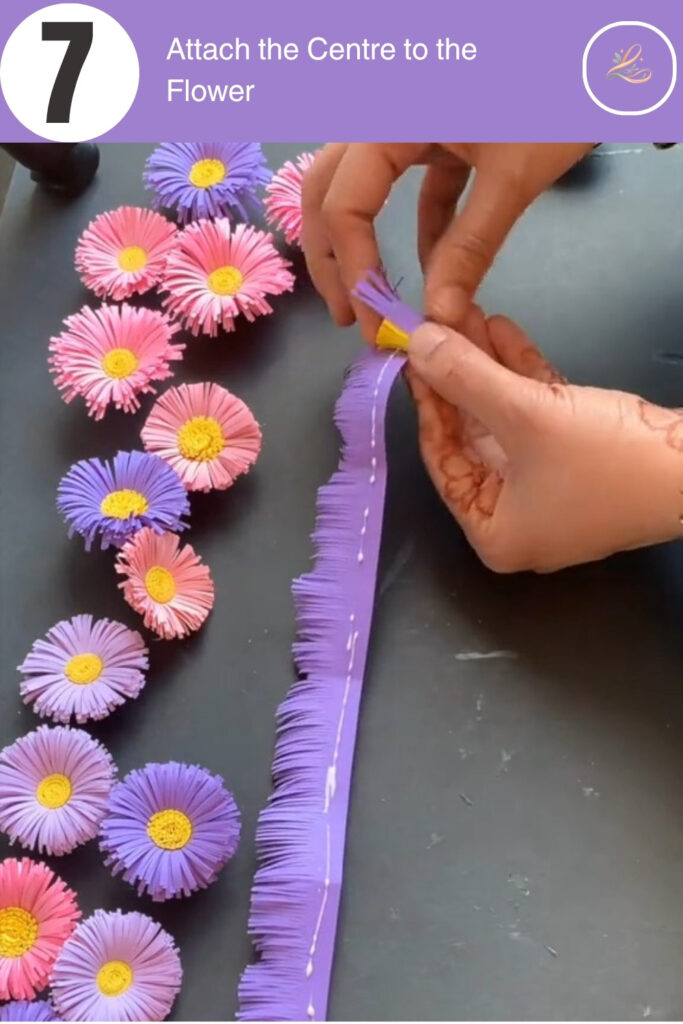
Pro Tip: If your yellow centre slips off to one side while the glue is setting, simply rest it back in the centre and hold gently until it grips. A cocktail stick is useful for applying tiny amounts of glue precisely if you are finding it tricky.
Step 8: Repeat in Multiple Colours and Arrange
Repeat the full process for each flower, mixing colours as you go pink, purple, and lilac all look beautiful together. Make at least 5–6 flowers to start, as they look most stunning when grouped together. Once all your flowers are dry, arrange them however you like in a small glass jar, on a card, or scattered across a decorative tray. Stand back and look at what you have made. You will not believe they are paper.
At this stage, you should have a whole little garden of paper daisies, each one unique and beautiful.
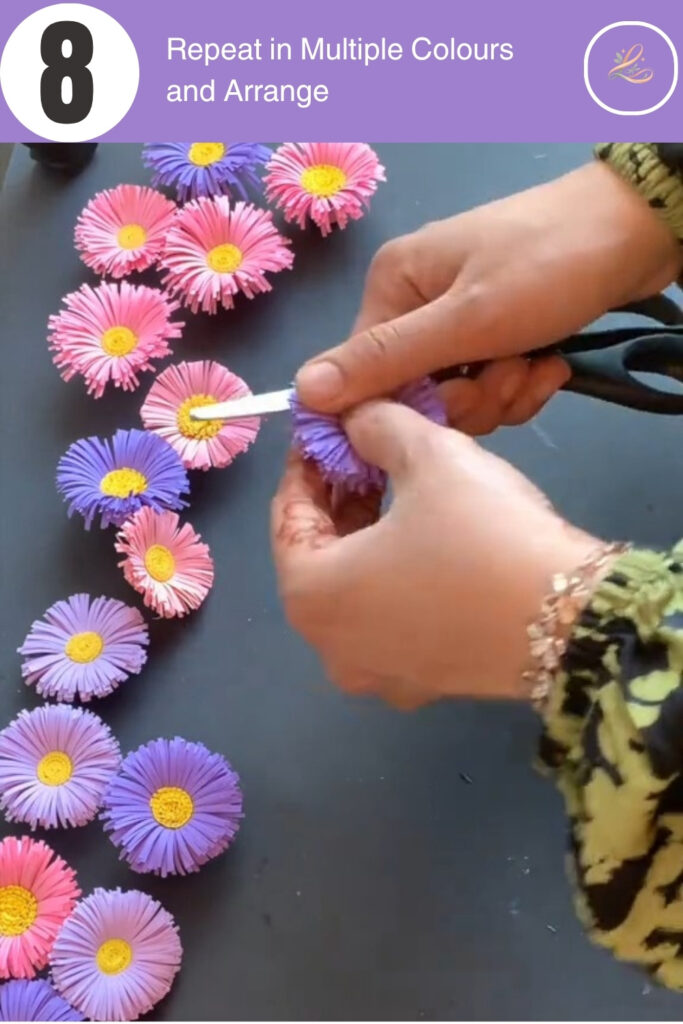
Pro Tip: Vary the size of your flowers by cutting your strips wider or narrower. Mixing large and small blooms together gives your arrangement a natural, garden-fresh look.
Tips & Tricks
Use good-quality paper for the best results. Thin printer paper works in a pinch, but it tears easily when you fringe and roll it. Cardstock or construction paper is thick enough to hold its shape and give those petals a beautiful, sturdy fan. Even a sheet of coloured A4 cardstock from a pack of mixed colours will do the job beautifully.
If your fringe tears all the way through, do not throw that strip away. Simply apply a tiny dot of glue where the tear happened, press it back together, and leave it to dry for 30 seconds before continuing. A little glue rescues almost any paper mishap, and the repair will be completely invisible once the flower is rolled.
Store your finished flowers flat in a box or envelope if you are not displaying them straight away. Paper flowers can get squashed or bent if they are left loose in a bag. A flat box lined with tissue paper is the kindest storage option. Your flowers will stay pristine for months and months.
Experiment with two-tone flowers for a gorgeous gradient effect. Cut half your petal strip in one colour and glue it end-to-end with a strip in a slightly different shade. When you roll the joined strip, you get a flower that shifts from one colour to another stunning for gifts and display arrangements.
The fringe does not need to be perfectly even. Real daisies have petals of all different lengths and angles. Slightly uneven fringe makes your paper daisies look more natural and handmade in the best possible way. If it is not perfect, it is probably more beautiful.
Ways to Use This Craft
As home decor, a small jar of paper daisies looks absolutely charming on a kitchen windowsill, a bathroom shelf, or a bedside table. These flowers suit cottage-style, bohemian, and Scandinavian-inspired interiors beautifully the soft pink and purple tones work especially well in rooms with neutral walls. You could also glue a cluster of flowers to a plain wooden frame for a piece of wall art that costs almost nothing.
As a gift, these daisies are wonderfully thoughtful. Tie a small bunch together with twine and attach them to a birthday gift bag instead of a bow the recipient gets a keepsake they can display long after the gift is gone. They are perfect for Mother’s Day, teacher appreciation gifts, Valentine’s Day, or any time you want to make someone feel truly seen.
As seasonal decor, swap your colour palette to suit the time of year. Use white and red for Christmas, orange and yellow for autumn, or pale blue and white for Easter. The same technique works across every season you never get bored of this craft.
Frequently Asked Questions
-
Q: How long does it take to make one paper daisy flower?
A: Each flower takes around 5 minutes once you get into the rhythm of it. Your very first flower might take a little longer as you get used to the fringing and rolling, and that is completely normal. After your second or third flower, you will speed up naturally. A full bunch of ten flowers takes most people around an hour.
-
Q: What if I make a mistake and my flower falls apart?
A: This happens to everyone on their first few tries, and it is completely fixable. If the roll unravels, simply reroll it and seal the base with a little extra glue. If a petal tears, a tiny dab of glue pressed together for 30 seconds sorts it right out. Nothing in this project is permanent until the glue dries, so you always have time to adjust.
-
Q: Where can I buy the coloured paper for this project?
A: You can find coloured cardstock or construction paper at any craft store, stationery shop, or large supermarket. It is also widely available online to search for ‘coloured cardstock A4 pack’ and you will find multipacks with plenty of shades to work with. A single pack will give you enough paper for dozens of flowers.
-
Q: Does the fringe need to be cut to a specific length? How deep should I cut into the strip?
A: Cut your fringe to about two-thirds of the width of your strip so if your strip is 2 cm wide, cut each slit about 1.3 cm deep, leaving around 7 mm of uncut paper along the bottom base edge. This uncut base is what holds the flower together when you roll it. If you cut too deep and go all the way through, the strip falls apart so err on the side of leaving a little more base than you think you need.
Closing
You did it. You made something genuinely beautiful from nothing more than a few strips of coloured paper, and that is something to feel proud of. Every one of those little daisies you created is a tiny work of art and no two will ever be exactly the same. Share your creation with us. We would love to see it! Tag us or leave a photo in the comments below. Ready for your next project? Try Adorable DIY Paper Gift Box Perfect for Beginners next!
Happy crafting! LOUVADECORES

2 thoughts on “Beautiful Paper Daisy Flower Tutorial DIY for Beginners”