

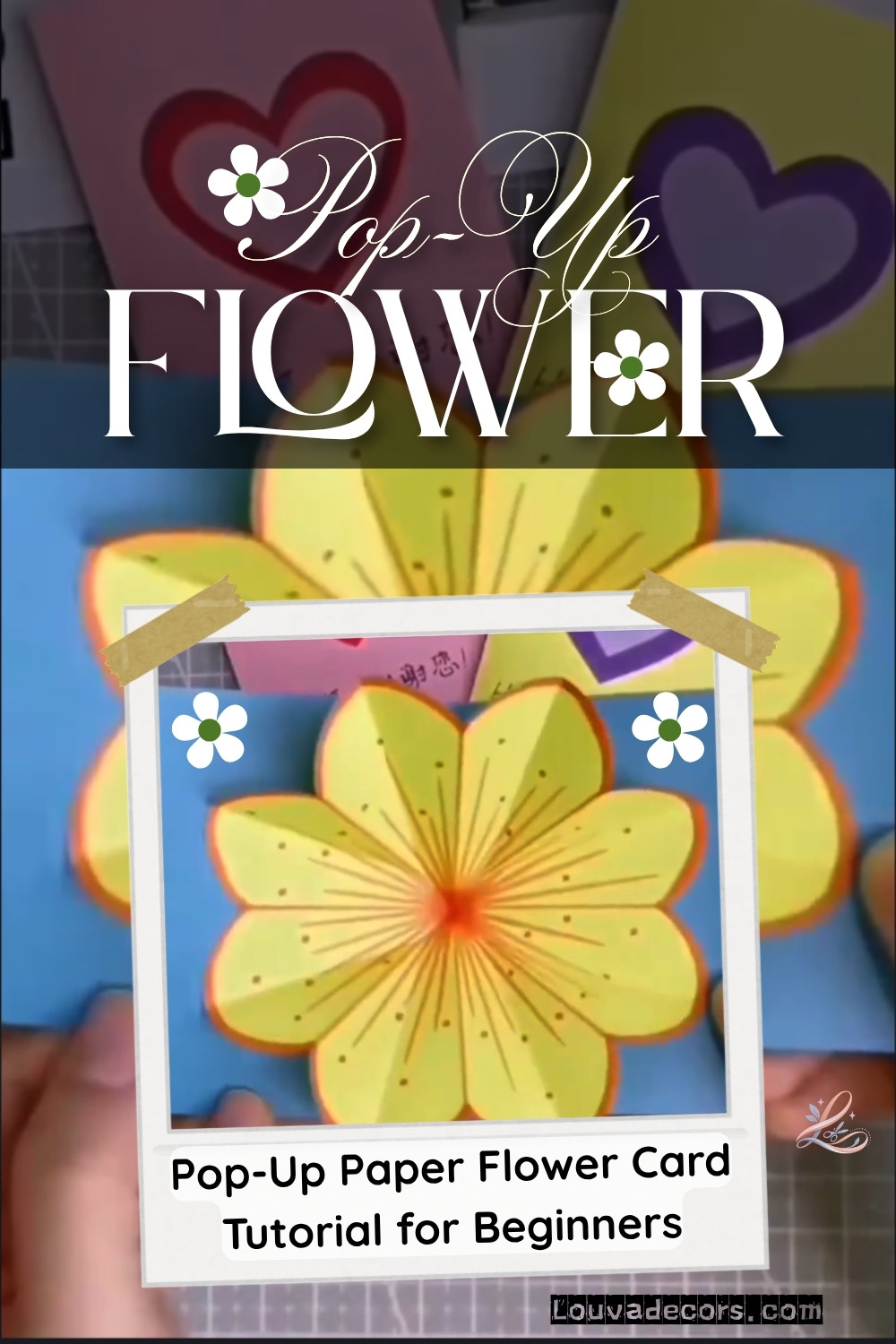
Picture opening a card and watching a full bloom of petals spring up to greet you. No flat, forgettable card, a real, three-dimensional flower made entirely from paper, rising right out of the page. That is exactly what you are going to make today.
You do not need any experience to make this. You have never folded paper into a flower before? Perfect. This post will walk you through every single step, and the video above shows it all in real time. By the time you finish, you will have a show-stopping handmade card that looks like it came from a boutique gift shop.
You will need one 15x15cm square of white paper, a coloured card base, scissors, a pencil, a ruler, and a marker pen for decorating. The whole project takes around 20–30 minutes.
Why You Will Love This Project
This pop-up paper flower card tutorial uses nothing but paper and a marker, no special machines, no expensive supplies. It looks incredibly impressive, but the technique is based on simple folds that anyone can master on their first try. Whether you want a unique birthday card, a heartfelt Mother’s Day gift, or a beautiful piece of paper art to frame, this project delivers all three. The full video tutorial is included so you can watch every fold before you try it yourself.
What You Will Need
- White paper (15x15cm square) [or cut any white printer paper to a square]
- Coloured cardstock for the card base (A5 or similar) [or use the inside of a cereal box covered with coloured paper]
- Scissors [standard kitchen scissors work fine]
- Pencil [any pencil for marking fold lines]
- Ruler [or use the straight edge of a book]
- Pink or red fine-tip marker [or a ballpoint pen]
- Black fine-tip marker for outline details [or any dark pen]
- Glue stick or double-sided tape [PVA craft glue in a pinch]
Total estimated cost: $2–$5
All materials can be found at your local craft store or ordered online.
Video Tutorial
Watch the full tutorial above before reading the written steps. The written steps below match the video exactly so you can follow along at your own pace.
Step-by-Step Instructions
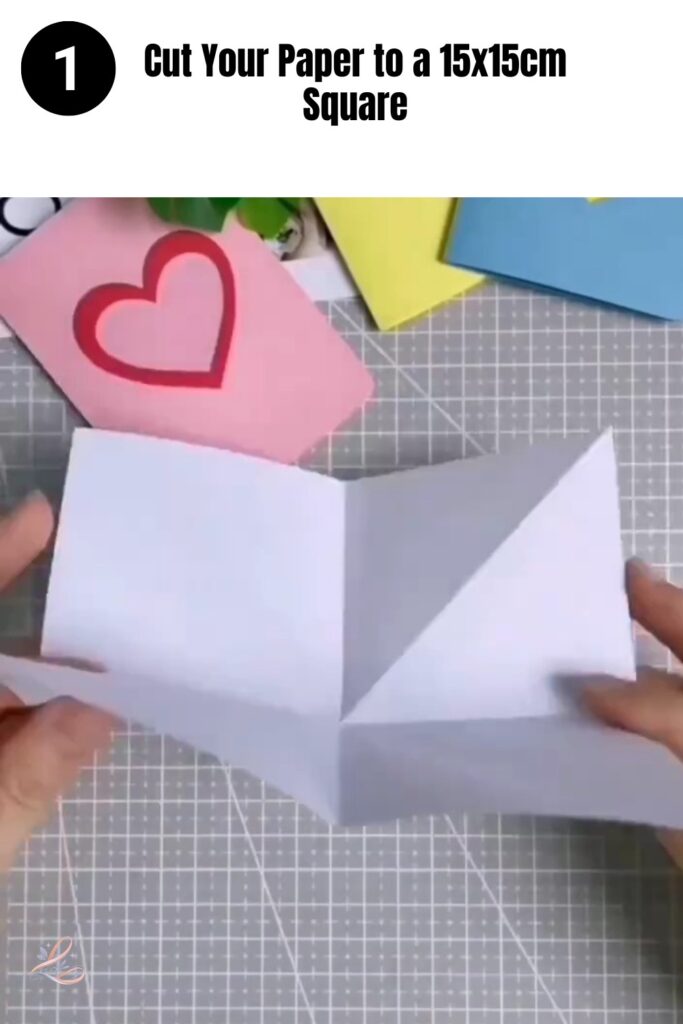
Step 1: Cut Your Paper to a 15x15cm Square
Start with a perfectly square piece of white paper that is the foundation of your whole flower. Take your ruler and pencil and measure out a 15x15cm square on your white paper. Cut it out carefully with your scissors, following the pencil line. It is okay if the edges are not razor perfect, a millimetre here and there will not affect the final flower at all.
At the end of this step you will have a neat white square sitting flat on your work surface.
Pro Tip: If you do not have a ruler handy, fold a standard sheet of printer paper (A4 or letter size) corner to corner so the short edge meets the long edge, crease the fold firmly, and cut along the crease. You will have a near-perfect square.
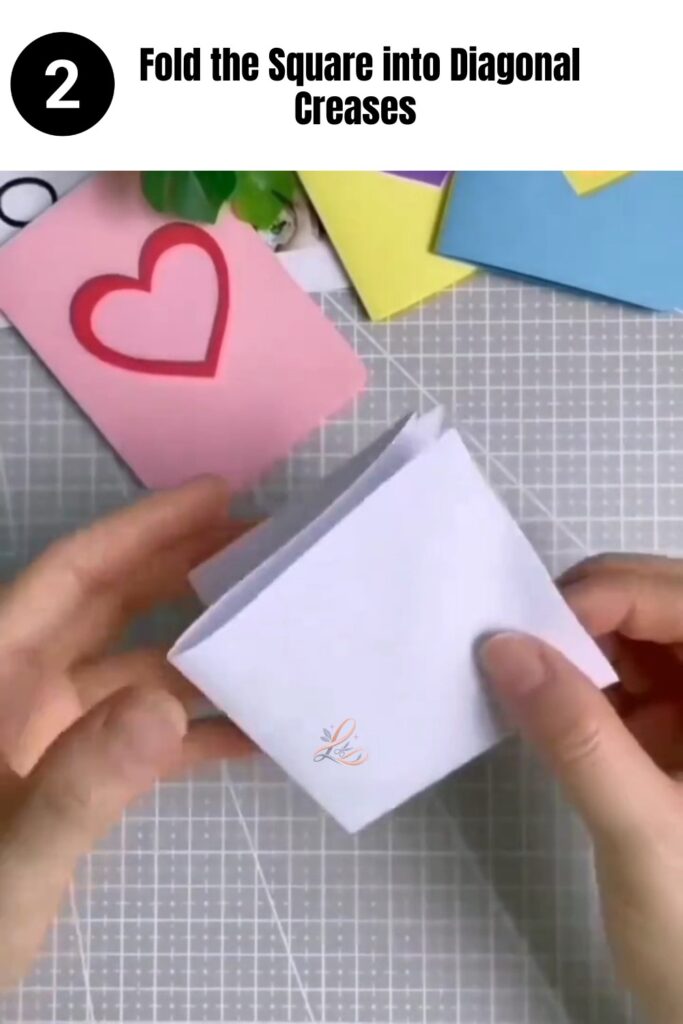
Step 2: Fold the Square into Diagonal Creases
Pick up your white square and fold it diagonally, corner to corner, in both directions to create an X crease pattern. Fold the bottom-left corner up to meet the top-right corner, press the fold firmly along the crease, then unfold. Rotate the paper 90 degrees and repeat so you end up with two diagonal crease lines crossing in the centre. Unfold the paper fully after both folds you are not keeping these folds in; you are just marking guidelines.
At the end of this step your flat white square will have a faint X crease running from corner to corner through the middle.
💡 Pro Tip: Run your thumbnail firmly along each crease line after folding. A crisp, sharp crease now makes every later fold land in exactly the right place. Take your time on this step.
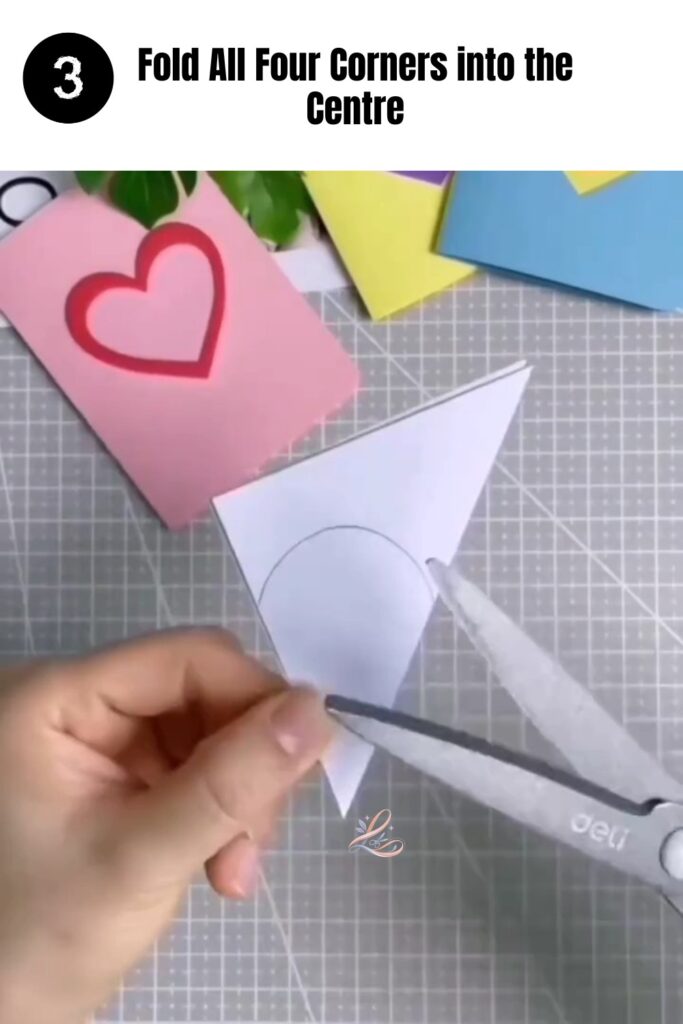
Step 3: Fold All Four Corners into the Centre
Bring each corner of the square in to meet the very centre point where your two creases cross. Work one corner at a time, fold the bottom corner up to the middle, press the crease, then do the top corner, then the left and right corners. When all four corners are folded in, you will have a smaller square shape (like a closed envelope). Press all four folds firmly flat.
At the end of this step you will have a compact, diamond-shaped square with all corners meeting neatly at the centre.
💡 Pro Tip: Use the crease lines from Step 2 as your target aim each corner tip directly at the X in the middle. It does not need to be surgical; a small gap at the centre is completely fine.
Step 4: Draw and Cut the Petal Shape
With all four corners still folded in, draw a rounded petal edge along the outer folded edge of each triangular flap. Use your pencil to sketch a gentle curved line from one side of each triangular flap to the other like drawing the top of a rounded hill on each flap. You are rounding off what would otherwise be sharp, pointed petal tips. Cut along each curved pencil line with your scissors, trimming through all layers at once.
At the end of this step, when you open the paper out flat, you will have a flower shape with six to eight rounded petals.
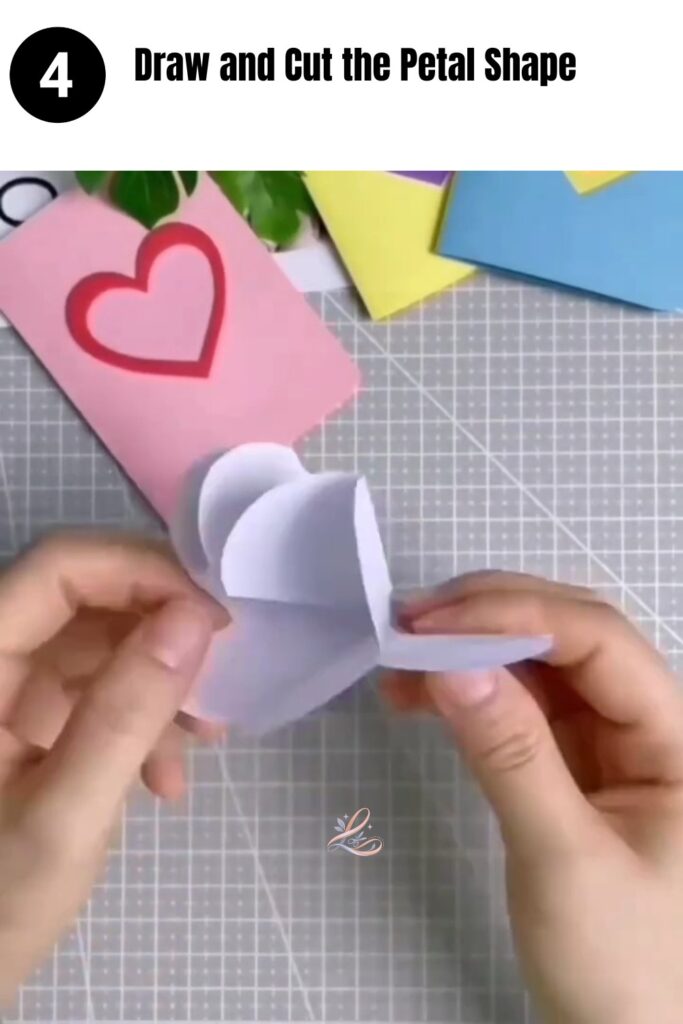
💡 Pro Tip: Do not try to make all four curves identical nature never does either. Slight variation between petals actually makes the flower look more realistic. It is okay if it is not perfect.
Step 5: Open Out and Flatten Your Flower Shape Appears
Gently unfold the paper and open it out completely flat on your work surface. You will now see a six-to-eight petal flower shape with rounded edges lying flat. Press the whole piece flat with your hand, smoothing out any tension in the paper. Take a moment to look at how the crease lines radiate out from the centre; this is the structural framework of your pop-up mechanism.
At the end of this step you will have your flat flower shape on the table, clearly showing all the crease lines running from the centre out to each petal.
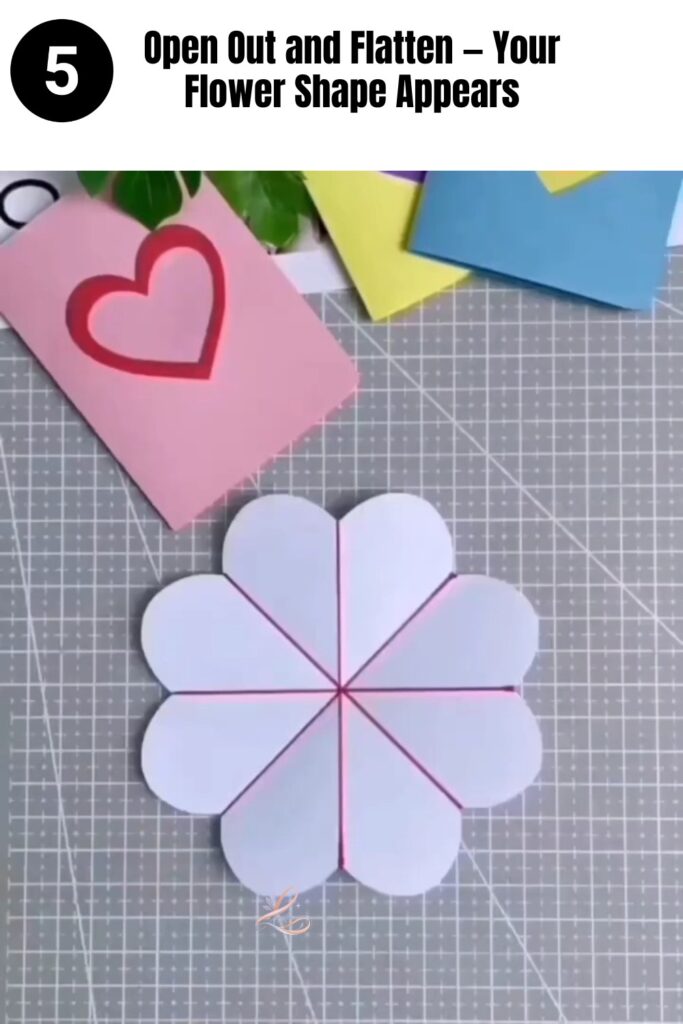
💡 Pro Tip: If any of the cut edges look a little jagged, use your scissors to do a quick tidy-up snip. No rush, a smoother edge gives you a cleaner final result.
Step 6: Draw the Petal Details with Your Marker
Use your pink or red fine-tip marker to draw radiating lines from the centre point of the flower out toward the tip of each petal. Start at the very centre and draw thin, straight lines spreading out like rays of sunlight around 8 to 12 lines per petal. Then add small dot details scattered across the petals for a cherry blossom or lily effect. Finally, use your black marker to draw a bold outline around the outer edge of every petal, giving each one definition and a polished, illustrated look.
At the end of this step your flower will look like a hand-drawn illustration detailed, colourful, and completely unique.
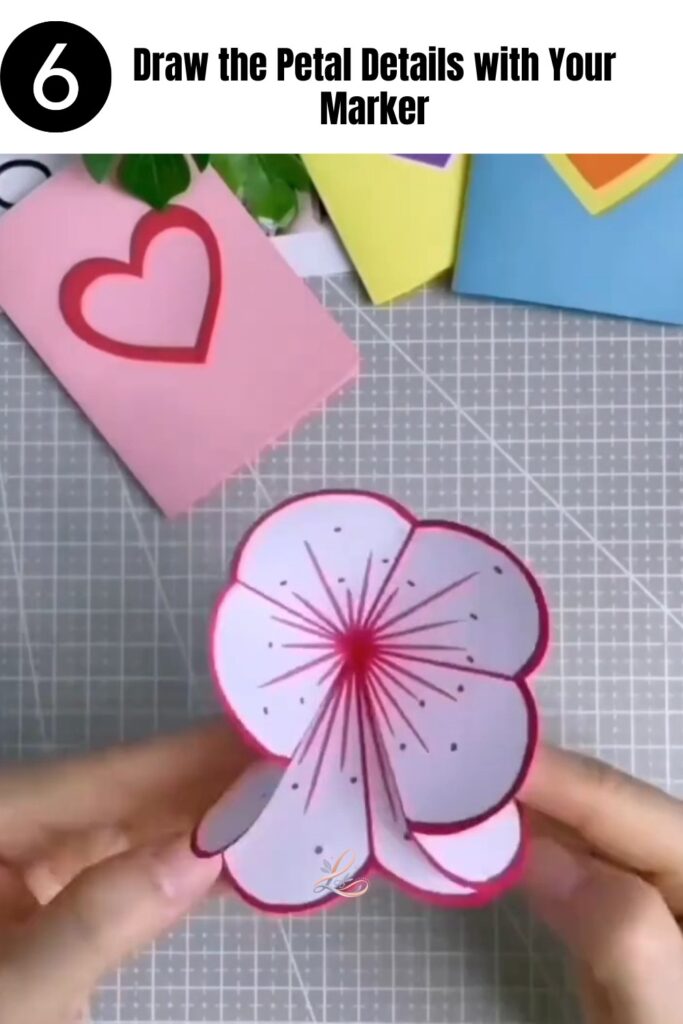
💡 Pro Tip: Keep your radiating lines light at first you can always go over them again to make them bolder. Drawing lightly first means you can correct the direction of a line before committing to it.
Step 7: Score and Re-Fold the Petal Creases
Now bring the petal folds back together, folding each petal section back along the original crease lines to re-create the 3D flower form. Use your ruler as a scoring guide if you like, place it along the crease line and press down, then fold the petal section up. Work your way around all the petals, folding alternate sections up and down so the flower begins to take on its dimensional shape. You are essentially re-folding the four-corners-to-centre fold from Step 3, but now with your decoration on the inside.
At the end of this step the flower will look cupped and three-dimensional in your hands, with petals rising upward.
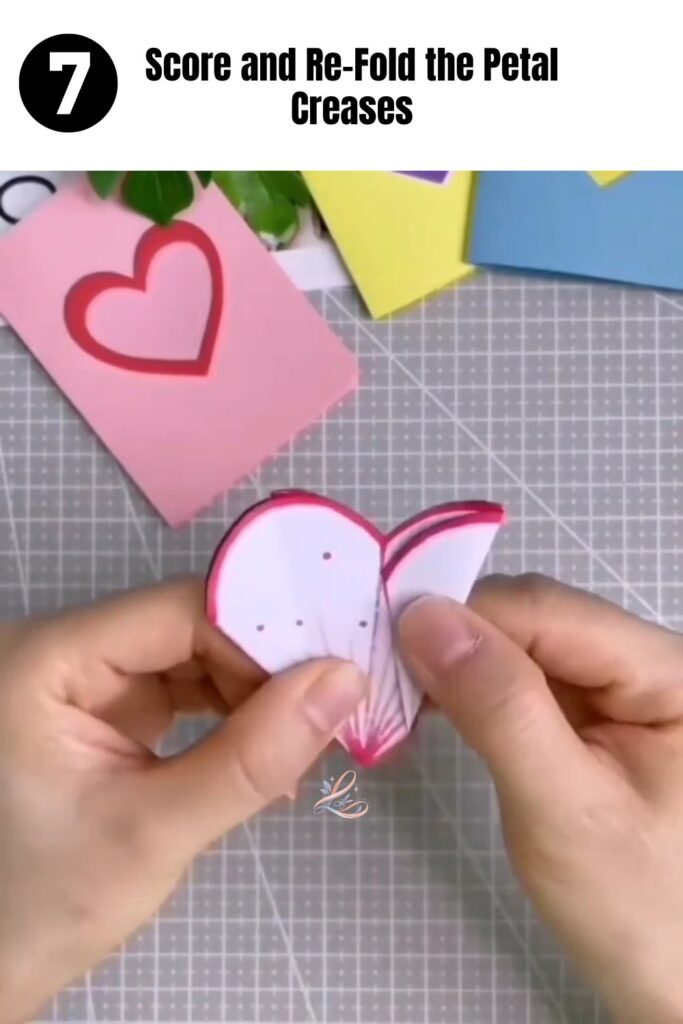
💡 Pro Tip: Fold slowly on this step. The crease lines from earlier will guide you; you do not need to measure anything new. Trust the paper.
Step 8: Pinch and Curl the Petals Open
Hold the base of the flower firmly between your fingers and gently push the centre upward from underneath while using your thumbs to encourage the outer petals to open and spread. The flower will spring into its full, open bloom shape. Gently curl each petal tip slightly backward with your finger to give the petals a natural, lifelike lift. Work your way around all the petals, giving each one a gentle backward curl.
At the end of this step your flower will look fully three-dimensional and in full bloom exactly like the finished cards you saw at the start of the video.
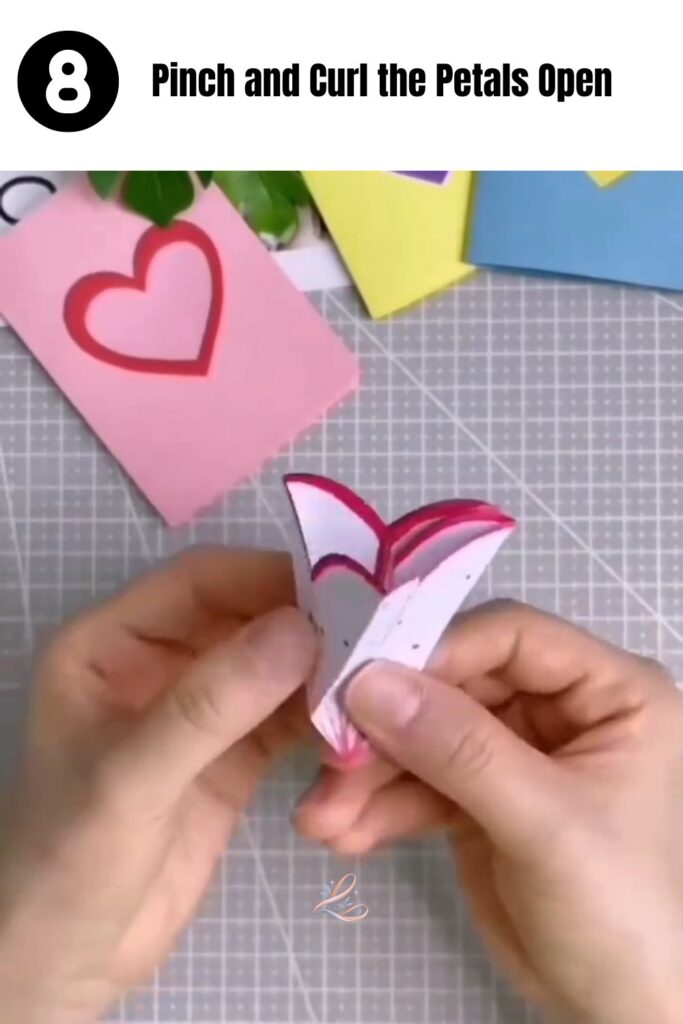
💡 Pro Tip: Do not force the petals open too quickly. A slow, steady push from the centre lets the paper open evenly. If one petal looks flatter than the others, give it an extra gentle backward curl from underneath.
Step 9: Fold Your Card Base in Half
Take your coloured cardstock and fold it cleanly in half to create the card base. A5 (148x210mm) or a similarly sized rectangle works perfectly. Press the fold firmly along the spine of the card with your thumbnail. Make sure the fold is straight, use your ruler as a guide if needed. This coloured card is what the flower will sit on, so a clean, crisp fold makes the whole card look much more polished.
At the end of this step you will have a neatly folded coloured card sitting flat on your table, ready to receive the flower.
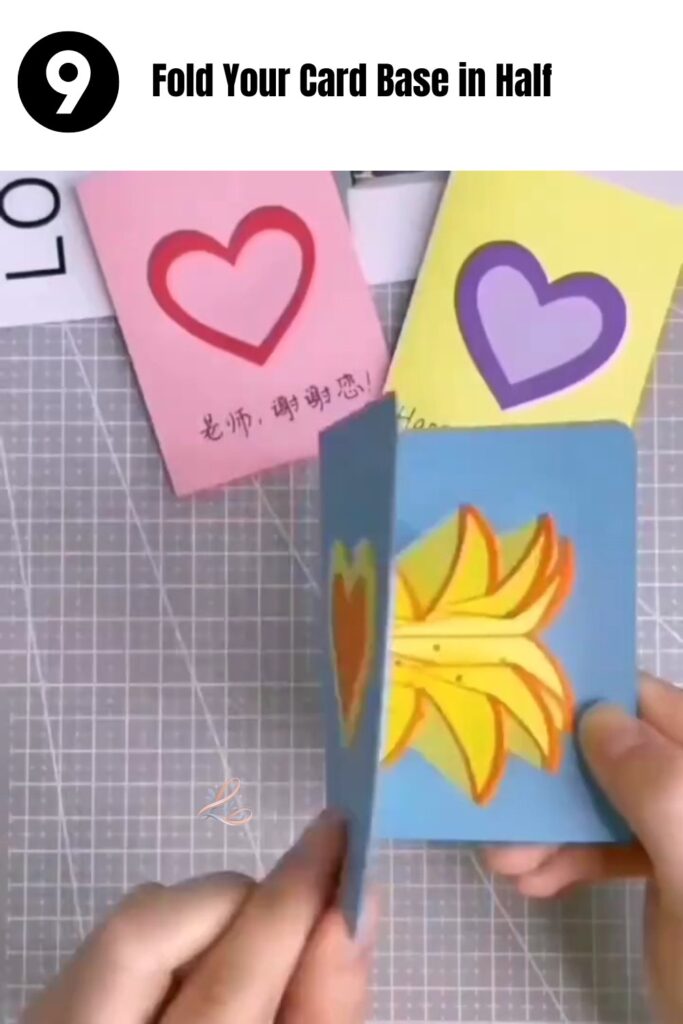
💡 Pro Tip: Choose a card colour that contrasts with your flower. The white and pink flower shown in the video pops beautifully against a deep pink, blue, or yellow card base all of which appear in the video as finished examples.
Step 10: Attach the Flower to the Card Base
Apply a thin, even layer of glue or double-sided tape to the flat back base of your paper flower. Press the flower firmly down onto the centre of the inside of the folded card. Hold it in place for 30 seconds. Make sure the flower is positioned centrally so that when the card is closed, the flower folds down flat, and when the card opens, the flower springs up.
At the end of this step you will have your completed pop-up flower card. Open and close it a few times to see the flower bloom and close it is incredibly satisfying.
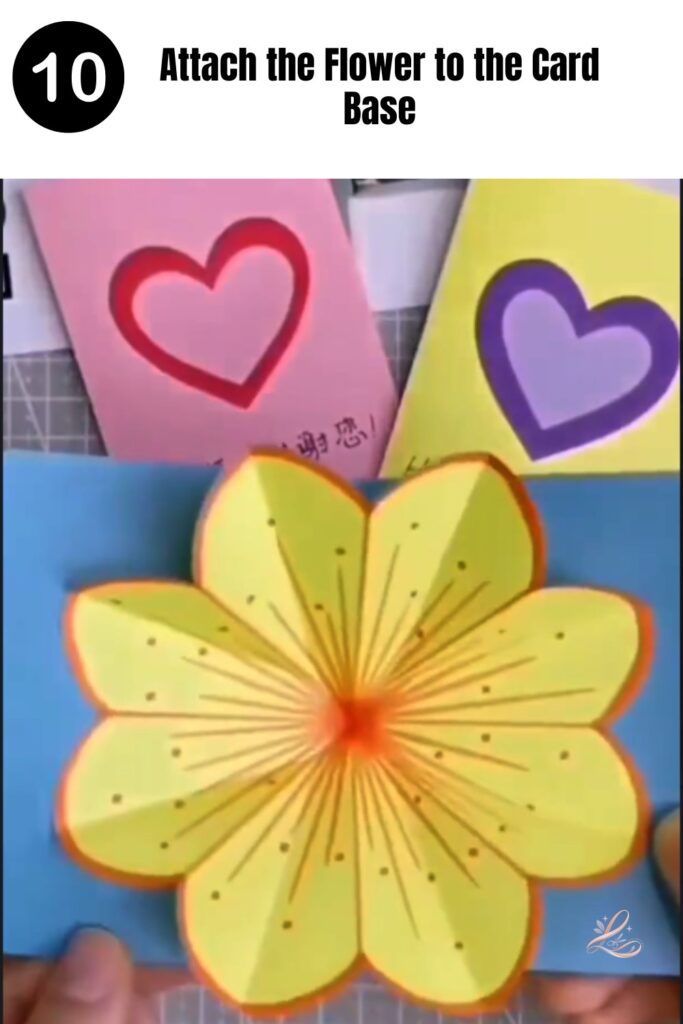
💡 Pro Tip: Before you glue, do a dry run. Close the card gently over the unglued flower to check it folds flat without buckling. If any petal sticks out, adjust the position slightly before committing with glue.
Learn More
- 20 Easy DIY Santa Crafts to Make This Christmas (Cheap & Adorable)
- Lovely Paper Pop Up Tulip Card Anyone Can Make
- Cute Paper Chinese New Year Garland Anyone Can Make
- Adorable Halloween Paper Hat Craft for Beginners
- Make Sweet DIY Flower Greeting Card for Loved Ones
Tips & Tricks
Use thinner paper for a tighter, springier pop-up action. Regular 80gsm printer paper (standard copy paper) gives the flower more flexibility than thick cardstock, which means it pops up more cleanly and closes more flat. If the flower feels stiff or refuses to close neatly inside the card, try folding it with thinner paper.
Draw your details before re-folding not after. It is much harder to decorate the petals once the flower is already in its 3D shape. Always complete all your marker drawing while the flower is still completely flat in Step 6. This gives you full access to every part of every petal.
A wobbly flower base can be fixed with a small tab of glue. If your flower rocks around or tips to one side once it is glued down, cut a tiny square of paper, fold it into a small tab, glue it to the underside of the flower base, and press it down flat on the card. This gives you a more stable anchor point.
Store your finished card flat, not upright. Keeping the card closed and stored flat (under a book, for instance) preserves the flower’s shape beautifully between making it and giving it. An upright card left on a shelf can gradually lose its pop-up spring over time.
Change your marker colour to change the whole mood. Yellow and orange markers on white paper give a sunflower effect. Purple on white becomes a lavender bloom. Blue tones create a forget-me-not. You can use the exact same folding and cutting technique every time and produce a completely different flower by simply swapping your marker colour.
Ways to Use This Craft
As home decor: A finished pop-up flower card, kept open and propped on a small picture ledge or tucked into a display frame, makes a beautiful piece of paper art. It suits modern, Scandi, and cottage-style interiors equally well, and a row of them in different colours along a mantelpiece looks stunning.
As a gift: This card is the gift itself. Anyone who receives a handmade pop-up flower card will know immediately that real time and care went into it. It is perfect for Mother’s Day, birthdays, Valentine’s Day, anniversaries, and thank-you notes, essentially any occasion where you want to say something more meaningful than a shop-bought card.
As a seasonal variation: Swap your white paper for pale gold or red to make an autumn flower card. Use red and pink markers to create a Valentine’s bloom. For Christmas, use deep green paper with a red marker for a poinsettia effect. The same technique adapts to every season.
Frequently Asked Questions
-
How long does it take to make a pop-up paper flower card?
Most beginners complete this card in 20 to 30 minutes. The folding and cutting takes around 10 minutes, and the drawing and decorating takes another 10 to 15 minutes. Once you have made one, a second one goes much faster.
-
What if my petals do not fold back up properly after I open the flower out?
A: This is very common on your first try. Re-fold each petal crease firmly using your thumbnail, working from the centre outward. The paper has a memory: a firm re-crease along the original fold line will bring it back into shape. No rush and no panic needed.
-
Where can I buy the materials for this project?
A: Everything you need paper, cardstock, markers, and a ruler is available at any craft store, stationery shop, or dollar store. You can also order all supplies online very affordably. The total cost is usually under $5, and most of the materials you may already have at home.
-
Does the colour of paper I use matter for the pop-up mechanism to work?
A: Not at all the colour is purely decorative. The pop-up action comes entirely from the fold lines, which work the same way on any colour paper. White is used in the video because it shows the marker decoration most clearly, but pink, yellow, or any coloured paper works identically.
You Did It!
Look at what you have made. A real, hand-crafted pop-up flower card is the kind that makes people catch their breath when they open it. You made that from a single square of paper and a marker pen, and that is genuinely something to be proud of. Share your creation with us. We would love to see it! Tag us or drop a photo in the comments. Ready for your next project? Try Adorable DIY Paper Gift Box Perfect for Beginners next!
Happy crafting! LOUVADECORES
Follow us on : Pinterest

7 thoughts on “Pop-Up Paper Flower Card Tutorial for Beginners”